Rudrashtakam Path
Rudrashtakam Path is a highly sacred and powerful devotional hymn dedicated to Lord Shiva in His form as Rudra. It is a composition of eight profound verses (Ashtakam) that glorify the infinite, formless, and supreme nature of Lord Shiva. This divine stotra is traditionally attributed to the great devotee-saint Tulsidas, who composed it with deep devotion and spiritual realization while praising Lord Shiva as the ultimate reality beyond time, space, and form.
The word Rudra refers to Lord Shiva in His fierce yet compassionate aspect, and Ashtakam means a set of eight verses. Thus, Rudrashtakam is a hymn that expresses deep devotion toward Lord Shiva as the supreme consciousness that pervades the entire universe. It is not just a prayer but also a profound philosophical expression of surrender, devotion, and realization of the Divine.
The Rudrashtakam Path is recited by devotees to invoke the blessings, protection, and grace of Lord Shiva. Each verse beautifully describes Shiva as infinite, eternal, all-pervading, and beyond human comprehension. He is depicted as the creator, preserver, and destroyer of the universe, yet untouched by it. The hymn emphasizes that Lord Shiva is beyond attributes (Nirguna) and beyond form (Nirakar), yet lovingly accessible to His devotees through pure devotion.
The central theme of Rudrashtakam is complete surrender to Lord Shiva. The hymn repeatedly expresses humility and devotion, where the devotee bows down to the Supreme Lord and acknowledges His infinite greatness. It teaches that true spiritual realization comes when one surrenders ego, pride, and attachment, and recognizes Shiva as the ultimate truth.
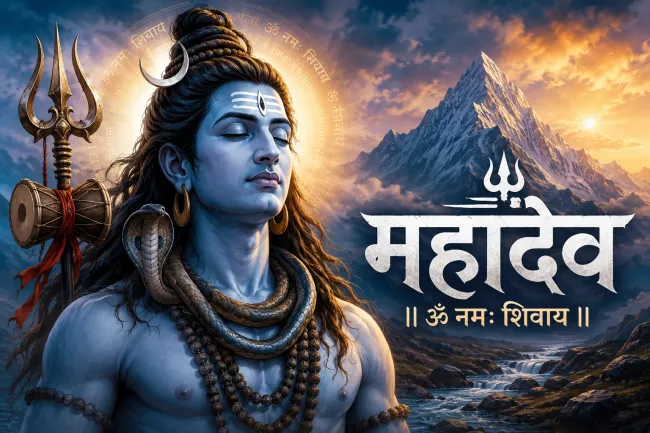
Rudrashtakam Path also highlights the divine qualities of Lord Shiva. He is described as calm, peaceful, compassionate, and yet immensely powerful. He resides in cremation grounds, wears sacred ashes, and meditates in deep yogic stillness. Despite His fearsome appearance, He is the kindest protector of His devotees. This dual nature of Shiva is a key spiritual teaching in the hymn.
The recitation of Rudrashtakam is believed to purify the mind and soul. Devotees chant it to remove fear, negativity, sins, and karmic burdens. The sacred vibrations of the verses create a peaceful and meditative atmosphere that helps calm the mind and deepen spiritual awareness. It is especially beneficial for those seeking inner peace, strength, and spiritual progress.
Rudrashtakam Path is often performed during Shiva worship rituals, meditation practices, and auspicious occasions such as Mondays dedicated to Lord Shiva, the holy month of Shravan, Pradosh Vrat, and the grand festival of Maha Shivaratri. Devotees also recite it while performing Shiva Abhishekam or sitting in quiet meditation to enhance spiritual focus.
The hymn is also a philosophical masterpiece that reflects deep spiritual wisdom. It teaches that the ultimate reality is beyond description, yet can be experienced through devotion. Rudrashtakam encourages seekers to move beyond material attachments and recognize the eternal truth of existence. It inspires humility, surrender, and unwavering faith in Lord Shiva.
Another important aspect of Rudrashtakam Path is emotional healing. The chanting of this stotra helps reduce anxiety, fear, stress, and mental confusion. Its rhythmic verses bring stability to the mind and create a sense of inner calm. Devotees often experience emotional relief and spiritual upliftment through regular recitation.
The hymn also emphasizes that Lord Shiva is the ultimate refuge for all beings. No matter how difficult life becomes, surrendering to Shiva brings protection and guidance. Rudrashtakam teaches that divine grace is always available to those who approach Him with sincerity and devotion.
Spiritually, Rudrashtakam Path is considered a bridge between devotion (bhakti) and realization (jnana). It not only expresses love for Lord Shiva but also reveals the truth of non-duality—that everything is ultimately Shiva alone. Through this realization, the devotee moves closer to liberation (moksha).
In conclusion, Rudrashtakam Path is a deeply profound and spiritually uplifting hymn that glorifies Lord Shiva as the infinite, eternal, and supreme consciousness. It inspires devotion, surrender, and self-realization while purifying the mind and removing negativity. Through its sacred verses, devotees experience peace, courage, and divine connection. Regular recitation of Rudrashtakam is believed to bring spiritual awakening, emotional balance, and ultimate liberation, guiding the soul toward union with Lord Shiva. Om Namah Shivaya.