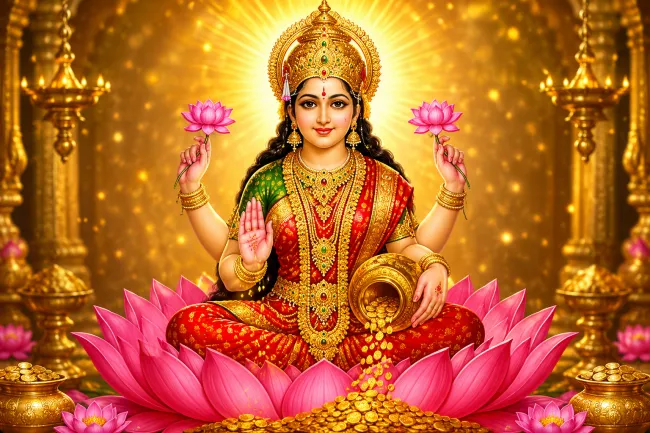
Lakshmi Ji Chalisa
Lakshmi Ji Chalisa is one of the most popular and revered devotional hymns dedicated to Goddess Mahalakshmi, the Hindu Goddess of wealth, prosperity, fortune, beauty, wisdom, and auspiciousness. Composed in simple and devotional verses, the Chalisa consists of forty sacred lines that glorify the divine qualities, compassion, and blessings of Goddess Lakshmi. Devotees across India and around the world recite the Lakshmi Chalisa with deep faith to seek financial stability, family happiness, success in life, spiritual growth, and protection from poverty and misfortune.
The Lakshmi Chalisa is considered an important part of daily worship as well as special religious occasions such as Diwali, Friday Lakshmi Puja, Navratri, Sharad Purnima, and other auspicious festivals dedicated to the Divine Mother. Its melodious verses create an atmosphere of peace, positivity, and devotion while strengthening the spiritual connection between the devotee and the Goddess.
The Glory of Goddess Lakshmi
Goddess Lakshmi is worshipped as the eternal source of all forms of prosperity. She is the divine consort of Lord Vishnu and symbolizes abundance, purity, compassion, generosity, success, and spiritual fulfillment. According to Hindu scriptures, she emerged from the cosmic ocean during the Samudra Manthan and became the embodiment of fortune and auspiciousness.
Lakshmi Ji is often depicted seated on a fully bloomed lotus flower while holding lotus blossoms in her hands and showering gold coins upon her devotees. Her divine form represents the blessings of wealth, purity, wisdom, and spiritual enlightenment. The Lakshmi Chalisa beautifully describes her glorious appearance, divine powers, and compassionate nature while praising her role as the protector and benefactor of humanity.
Significance of Lakshmi Ji Chalisa
The Lakshmi Chalisa is much more than a devotional song. It is a sacred prayer that allows devotees to meditate upon the divine qualities of Goddess Lakshmi and invite her blessings into their lives. Every verse expresses gratitude for her compassion and seeks her grace for prosperity, happiness, health, and peace.
The Chalisa reminds devotees that true wealth is not limited to money and material possessions. Real prosperity includes wisdom, knowledge, family harmony, good health, moral values, spiritual awareness, and inner satisfaction. Through its devotional verses, the Lakshmi Chalisa teaches that prosperity should always be accompanied by righteousness, humility, charity, and gratitude.
Spiritual Meaning of the Lakshmi Chalisa
The verses of Lakshmi Ji Chalisa describe the Goddess as the mother of the universe who nourishes all living beings with her divine energy. She is praised as the remover of poverty, fear, sorrow, ignorance, and suffering while granting happiness, fortune, courage, and success to sincere devotees.
The Chalisa also emphasizes that Goddess Lakshmi resides where cleanliness, honesty, discipline, devotion, kindness, and respect for others exist. It encourages individuals to live virtuous lives and to earn wealth through ethical means while using it for the welfare of family and society.
The spiritual message of the Chalisa inspires devotees to balance material success with spiritual wisdom, reminding them that lasting happiness comes from devotion and righteous living.
Importance in Hindu Worship
Lakshmi Ji Chalisa occupies a special place in Hindu devotional practices. Millions of devotees recite it daily in homes and temples to seek the blessings of Goddess Mahalakshmi. The hymn is especially popular on Fridays, which are traditionally dedicated to Lakshmi worship.
During Diwali, one of the most celebrated festivals in Hinduism, families gather to perform Lakshmi Puja and chant the Lakshmi Chalisa to welcome prosperity and good fortune into their homes. Business owners, students, homemakers, and working professionals also recite the Chalisa before beginning important tasks, believing that the Goddess removes obstacles and grants success.
The recitation of Lakshmi Chalisa during Navratri, Varalakshmi Vratam, and other religious ceremonies is considered highly auspicious and spiritually rewarding.
Benefits of Reciting Lakshmi Ji Chalisa
According to Hindu traditions and devotional beliefs, sincere recitation of Lakshmi Ji Chalisa offers numerous spiritual and worldly benefits. Devotees believe that the Chalisa attracts positive energy and removes financial difficulties, obstacles, fear, and negativity from life.
Regular chanting is believed to improve prosperity, family harmony, business success, career growth, educational progress, and mental peace. It also helps devotees develop qualities such as patience, generosity, gratitude, self-confidence, and devotion.
Many people recite the Chalisa to seek relief from debts, financial instability, and uncertainty while praying for stability, abundance, and long-term success. The sacred vibrations of the verses are believed to purify the environment and create an atmosphere filled with divine grace and positivity.
Best Time to Recite Lakshmi Ji Chalisa
The Lakshmi Chalisa can be recited at any time with faith and devotion, but early morning and evening prayers are considered especially beneficial. Fridays hold particular significance for Goddess Lakshmi, and many devotees observe fasting and special worship on this day while reciting the Chalisa.
The hymn is also widely recited during Diwali celebrations, Sharad Purnima, Kojagiri Purnima, Navratri, and other important festivals associated with the worship of Goddess Lakshmi. Lighting a ghee lamp, offering lotus flowers, sweets, fruits, and incense while chanting the Chalisa enhances the devotional experience.
Regular recitation with concentration and a pure heart is believed to bring continuous blessings of prosperity and peace.
Teachings of Lakshmi Ji Chalisa
The Lakshmi Ji Chalisa teaches valuable lessons about life, prosperity, and spirituality. It emphasizes that wealth should always be earned honestly and used wisely for the benefit of family, society, and charitable purposes. The Goddess blesses those who practice compassion, humility, generosity, truthfulness, and devotion.
The Chalisa also reminds devotees that greed and selfishness lead to suffering, while gratitude and selfless service attract divine grace. It encourages people to cultivate inner purity and spiritual discipline while fulfilling their worldly responsibilities with sincerity and righteousness.
These timeless teachings continue to inspire millions of devotees to live balanced lives that combine material success with ethical values and spiritual wisdom.
Conclusion
Lakshmi Ji Chalisa is a sacred devotional hymn that beautifully glorifies the divine qualities and infinite compassion of Goddess Mahalakshmi. Its forty verses inspire faith, devotion, gratitude, and righteousness while guiding devotees toward prosperity, happiness, wisdom, and spiritual fulfillment.
Reciting the Lakshmi Chalisa with sincerity and devotion is believed to remove obstacles, attract abundance, strengthen inner peace, and invite the divine blessings of the Goddess into every aspect of life. Whether performed as part of daily worship or during special festivals, the Lakshmi Ji Chalisa remains a timeless source of spiritual inspiration and divine grace for millions of devotees around the world.