Lakshmi Ashtottara Namavali
Lakshmi Ashtottara Namavali, also known as Sri Lakshmi Ashtottara Shatanamavali, is a sacred collection of 108 divine names of Goddess Lakshmi, the Hindu goddess of wealth, prosperity, fortune, beauty, purity, and auspiciousness. Each name in this revered hymn represents a unique quality, power, or manifestation of the Divine Mother and reveals her role as the eternal source of abundance, happiness, wisdom, compassion, and spiritual enlightenment. Chanting these 108 sacred names is considered one of the most powerful forms of worship dedicated to Goddess Lakshmi and is widely practiced by devotees across the world.
The number 108 holds profound spiritual significance in Hinduism and many other Eastern traditions. It symbolizes completeness, cosmic harmony, and divine perfection. For this reason, the recitation of Lakshmi Ashtottara Namavali is believed to invoke the full blessings of Goddess Lakshmi, bringing prosperity, peace, success, and spiritual growth into the lives of devotees. Each name acts as a sacred mantra that helps establish a deeper connection with the Divine Mother while purifying the mind and heart.
Lakshmi Ashtottara Namavali glorifies Goddess Lakshmi through various names that highlight her divine attributes and universal powers. She is praised as the bestower of wealth, the giver of fortune, the mother of the universe, the source of knowledge, the embodiment of beauty, the protector of righteousness, and the destroyer of poverty and suffering. These sacred names reveal that Goddess Lakshmi is much more than a deity associated with material wealth; she represents the complete prosperity that includes health, wisdom, happiness, harmony, devotion, virtue, and inner fulfillment.
According to Hindu scriptures, Goddess Lakshmi emerged during the Samudra Manthan, or the churning of the cosmic ocean, carrying a lotus flower and radiating divine brilliance. She later chose Lord Vishnu as her eternal consort, symbolizing the inseparable relationship between prosperity and righteousness. Lakshmi Ashtottara Namavali reflects this sacred association by portraying the goddess as the eternal companion of Lord Vishnu and the preserver of cosmic balance, abundance, and divine order.
Each name in the Ashtottara Namavali carries deep symbolic meaning. Some names describe her radiant beauty and divine grace, while others emphasize her compassion, generosity, wisdom, and protective nature. Several names praise her as the source of all wealth, both material and spiritual, while others highlight her role as the remover of fear, sorrow, ignorance, and misfortune. By chanting these names with devotion, devotees meditate upon the countless virtues of the Divine Mother and seek to cultivate those same qualities within themselves.
Lakshmi Ashtottara Namavali is traditionally recited during daily worship, Friday Lakshmi Puja, Diwali celebrations, Varalakshmi Vratam, Navratri, Kojagiri Purnima, Sharad Purnima, and other auspicious occasions dedicated to Goddess Lakshmi. During the recitation, devotees often offer flowers, kumkum, turmeric, rice grains, sandalwood paste, fruits, sweets, incense, and lamps while chanting each of the 108 names. This ritual is believed to strengthen devotion and invite divine blessings into the home and family.
The chanting of Lakshmi Ashtottara Namavali is considered highly beneficial for individuals seeking financial stability, business success, career growth, educational excellence, family harmony, and overall prosperity. Traditional beliefs suggest that regular recitation helps remove financial difficulties, reduce obstacles, attract positive opportunities, and create an atmosphere of peace and abundance. Many devotees also believe that the sacred vibrations generated through the chanting purify the surroundings and promote spiritual well-being.
Beyond its material benefits, Lakshmi Ashtottara Namavali emphasizes the importance of inner prosperity and moral values. It teaches that true wealth is measured not merely by possessions but by virtues such as honesty, kindness, humility, generosity, compassion, patience, wisdom, and devotion. Goddess Lakshmi is believed to reside where cleanliness, truthfulness, gratitude, charity, discipline, and righteousness are practiced. Therefore, the Namavali inspires devotees to lead ethical and spiritually meaningful lives.
The hymn also serves as a powerful meditation practice. As each divine name is recited, the mind gradually becomes focused on the sacred qualities of the goddess, reducing stress, anxiety, and negative thoughts. This process cultivates inner peace, concentration, positivity, and devotion while strengthening the spiritual connection between the devotee and the Divine Mother. Many practitioners experience emotional balance and mental clarity through the regular chanting of these sacred names.
Lakshmi Ashtottara Namavali highlights the many forms in which Goddess Lakshmi blesses humanity. She is worshipped as the giver of wealth, courage, victory, knowledge, fertility, agriculture, food, prosperity, and spiritual liberation. These different aspects remind devotees that prosperity is multidimensional and includes every blessing required for a fulfilling and balanced life. The hymn encourages people to seek success while remaining humble, compassionate, and devoted to righteous living.
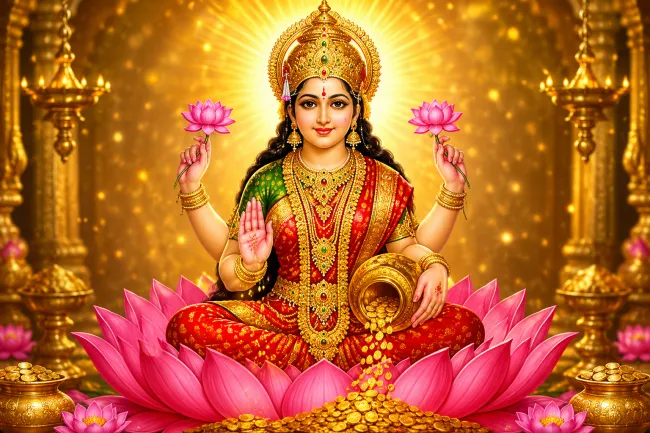
The symbolism associated with Goddess Lakshmi further enriches the significance of the Namavali. Her lotus seat represents purity and spiritual awakening, her four hands symbolize righteousness, wealth, desire, and liberation, while the flowing gold coins from her hands signify continuous prosperity and generosity. The elephants often depicted beside her represent royal power, strength, wisdom, and divine authority. These sacred symbols collectively remind devotees that prosperity should always be accompanied by purity, wisdom, and responsibility.
Lakshmi Ashtottara Namavali is also recited before beginning important life events such as starting a new business, purchasing a home, entering a new career, celebrating marriages, conducting housewarming ceremonies, and undertaking educational pursuits. Devotees believe that invoking the 108 names of Goddess Lakshmi before such occasions attracts success, removes obstacles, and ensures divine protection throughout the journey ahead.
Spiritually, the Namavali teaches that every form of abundance originates from divine grace. It encourages individuals to express gratitude for their blessings and to use their prosperity for the welfare of family, society, and humanity. By combining devotion with righteous action, the hymn presents a path toward both worldly success and spiritual enlightenment.
In modern times, Lakshmi Ashtottara Namavali remains one of the most widely recited devotional hymns dedicated to Goddess Lakshmi. Its timeless teachings continue to inspire millions of devotees seeking prosperity, peace, happiness, and divine guidance. The sacred names provide not only a means of worship but also a source of spiritual wisdom that encourages balance between material achievement and inner contentment.
Overall, Lakshmi Ashtottara Namavali is a powerful expression of devotion that celebrates the countless divine qualities of Goddess Lakshmi. Through the chanting of her 108 sacred names, devotees seek blessings for wealth, wisdom, health, harmony, success, and spiritual growth while cultivating gratitude, humility, compassion, and righteousness in their daily lives. The Namavali remains an enduring symbol of divine abundance and continues to illuminate the spiritual path of countless devotees across generations.