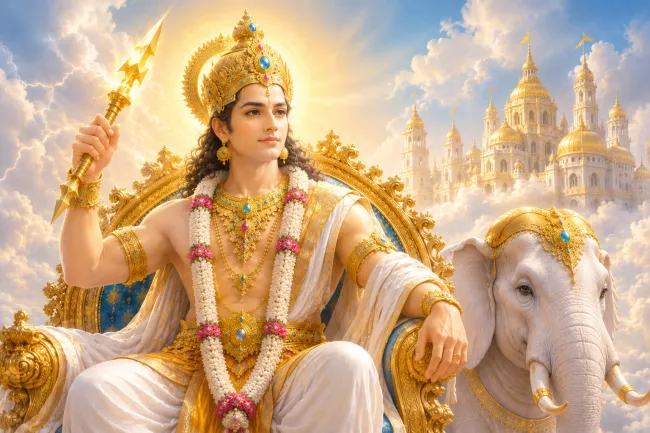
Indra Dev Aarti
Indra Dev Aarti is a sacred devotional hymn dedicated to Lord Indra, the divine king of heaven and the ruler of the celestial gods in Hindu tradition. The Aarti is performed with deep faith, devotion, and reverence to honor Lord Indra's immense power, divine authority, and benevolent nature. Through the singing of this holy hymn, devotees express their gratitude for his blessings and seek his protection, prosperity, courage, and guidance in all aspects of life.
Lord Indra occupies a prominent place in the Vedic scriptures and is regarded as one of the most powerful deities in Hinduism. He is the ruler of Swarga (Heaven), the lord of rain, thunderstorms, lightning, and clouds, and the protector of both gods and human beings. Indra Dev Aarti praises these divine attributes and celebrates his role in maintaining balance and harmony throughout the universe.
The Divine Glory of Lord Indra
The Aarti glorifies Lord Indra as the supreme king among the Devas. He is often depicted seated upon a magnificent throne in the celestial city of Amaravati, surrounded by heavenly beings and divine splendor. The hymn praises his majestic appearance, his golden crown, his divine radiance, and his mighty weapon, the Vajra (thunderbolt).
As the king of heaven, Lord Indra symbolizes authority, leadership, courage, and responsibility. The Aarti reminds devotees that true leadership is not merely about power but about protecting others, maintaining justice, and serving the welfare of all beings. Through its verses, worshippers are encouraged to cultivate these noble virtues in their own lives.
Lord of Rain and Prosperity
One of the most significant aspects of Lord Indra's divine role is his control over rain and weather. In ancient times, rain was essential for agriculture, prosperity, and survival. Farmers and communities depended upon timely rainfall for successful harvests and abundant food production.
Indra Dev Aarti honors Lord Indra as the giver of life-sustaining rain and the nourisher of the earth. The hymn acknowledges his role in filling rivers, watering crops, and ensuring prosperity for all living beings. Devotees offer prayers seeking his blessings for favorable weather, agricultural abundance, and the well-being of their families and communities.
The rain bestowed by Lord Indra is also seen as a symbol of divine grace. Just as rain nourishes the earth, his blessings are believed to nourish the hearts and minds of devotees, bringing peace, happiness, and fulfillment.
Celebration of Heroic Deeds
A central theme of Indra Dev Aarti is the celebration of Lord Indra's heroic victories over evil forces. Hindu scriptures describe numerous battles in which he fought powerful demons that threatened cosmic order and the welfare of the universe.
Among his greatest achievements is the defeat of the demon Vritra, who had imprisoned the waters of the world and caused widespread drought and suffering. Armed with his divine thunderbolt, the Vajra, Lord Indra courageously confronted and defeated Vritra, releasing the waters and restoring life to the earth.
The Aarti praises this heroic act as a symbol of the triumph of righteousness over evil, light over darkness, and hope over despair. It inspires devotees to confront their own difficulties with determination and faith, knowing that divine support is always available.
Symbolism of the Vajra
The Vajra, Lord Indra's celestial weapon, holds profound spiritual significance and is frequently referenced in devotional hymns and prayers. It symbolizes strength, wisdom, determination, and the power to destroy ignorance and negativity.
In the Aarti, the Vajra represents the divine force that removes obstacles and protects devotees from harmful influences. It serves as a reminder that spiritual strength and moral courage are essential for overcoming life's challenges.
Devotees who meditate upon Lord Indra and his Vajra seek the inner strength needed to face adversity, make righteous decisions, and remain steadfast in their spiritual journey.
Spiritual Significance of the Aarti
Indra Dev Aarti is much more than a song of praise; it is a form of spiritual worship that helps devotees connect with divine energy. The act of singing the Aarti creates a sacred atmosphere filled with devotion, positivity, and spiritual upliftment.
As devotees chant the holy verses, they focus their minds on Lord Indra's virtues and seek to absorb those qualities within themselves. The Aarti encourages the development of courage, self-confidence, discipline, generosity, and leadership.
The rhythmic singing of the hymn, accompanied by the offering of light, incense, flowers, and prayers, helps purify the mind and create inner peace. It strengthens faith and deepens the devotee's relationship with the divine.
Rituals Associated with Indra Dev Aarti
The performance of the Aarti usually takes place after worship and prayers dedicated to Lord Indra. A lit lamp is waved before the deity while devotees sing the sacred hymn with devotion. Bells may be rung, incense offered, and flowers presented as symbols of respect and surrender.
The light of the Aarti lamp symbolizes divine wisdom that removes the darkness of ignorance and illuminates the path of righteousness. As the lamp is offered, devotees pray for spiritual enlightenment, protection, and blessings.
Many devotees also perform the Aarti during special religious occasions, festivals, and ceremonies related to prosperity, rainfall, and agricultural success.
Benefits of Reciting Indra Dev Aarti
According to Hindu beliefs, the sincere recitation of Indra Dev Aarti can bring numerous spiritual and worldly benefits. These include:
- Increased courage and confidence.
- Success in important endeavors.
- Protection from obstacles and negative influences.
- Prosperity and abundance.
- Favorable circumstances and opportunities.
- Inner peace and mental strength.
- Improved leadership qualities.
- Stronger faith and devotion.
- Harmony within the family and community.
- Divine blessings for overall well-being.
Regular participation in the Aarti helps devotees maintain a positive outlook and remain connected to spiritual values.
Lessons Taught by Indra Dev Aarti
The Aarti teaches several timeless lessons that remain relevant in modern life. It reminds devotees that courage is necessary to overcome challenges, that leadership requires responsibility, and that true success comes from serving others and upholding righteousness.
The hymn also emphasizes gratitude for nature's gifts and respect for the divine forces that sustain life. Through the worship of Lord Indra, devotees learn the importance of harmony, balance, and cooperation in maintaining personal and social well-being.
Furthermore, the Aarti encourages humility by showing that even great power must be guided by wisdom and moral principles.