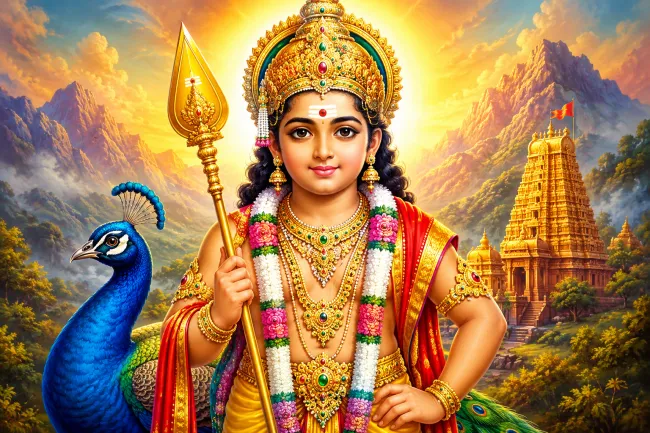
Kartikeya 108 Names
The 108 Names of Bhagwan Kartikeya, popularly known as the Kartikeya Ashtottara Shatanamavali, constitute one of the most sacred and revered forms of worship dedicated to Kartikeya, the divine son of Lord Shiva and Goddess Parvati. These 108 names collectively describe the Lord's divine qualities, powers, virtues, achievements, and spiritual significance. Each name is a sacred mantra in itself and reveals a unique aspect of Kartikeya's divine personality, making the recitation of these names a powerful form of devotion and meditation.
Bhagwan Kartikeya is known by many names, including Skanda, Murugan, Subrahmanya, Kumara, Guha, Shanmukha, and Mahasena. Each of these names carries profound spiritual meaning and highlights a particular dimension of his divine nature. The Ashtottara Shatanamavali gathers these and many other names into a comprehensive prayer that allows devotees to contemplate the fullness of Lord Kartikeya's glory and grace.
The 108 names begin by glorifying Kartikeya as the divine child of Shiva and Parvati, emphasizing his sacred birth and celestial mission. According to Hindu scriptures, he was born to destroy the demon Tarakasura, whose oppression had disturbed the cosmic order. Through his divine power, courage, and wisdom, Kartikeya defeated the demon and restored peace to the universe. Many names within the Ashtottara commemorate this heroic achievement and celebrate him as the protector of righteousness and the destroyer of evil.
One of the central themes reflected in the 108 names is courage and divine leadership. Names such as Mahasena, Senapati, and Skanda praise him as the commander of the celestial armies. These names symbolize leadership, determination, bravery, and responsibility. They remind devotees that true leadership involves protecting others, upholding justice, and serving the greater good. Through these names, worshippers seek the strength and confidence needed to overcome life's difficulties and fulfill their duties with integrity.
The Ashtottara also highlights Lord Kartikeya's role as the embodiment of wisdom and spiritual knowledge. Names such as Subrahmanya, Swaminatha, and Guha portray him as a divine teacher who guides seekers toward truth and enlightenment. According to tradition, Kartikeya possessed such profound wisdom that he explained the meaning of the sacred syllable Om even to Lord Shiva. These names inspire devotees to pursue knowledge, cultivate understanding, and seek spiritual growth through study, contemplation, and devotion.
A distinctive aspect of Lord Kartikeya celebrated throughout the 108 names is his six-faced form, known as Shanmukha or Shadanana. Each of his six faces symbolizes a divine quality such as wisdom, courage, compassion, discipline, purity, and spiritual awareness. The names associated with this form emphasize his ability to perceive all directions and protect devotees from every type of danger. They also remind worshippers of the importance of developing a balanced and virtuous character.
Many names within the Ashtottara describe Kartikeya's divine appearance and symbols. His peacock vehicle is frequently praised as a symbol of victory over pride, arrogance, and worldly attachments. The sacred spear known as the Vel, given to him by Goddess Parvati, is glorified as a symbol of wisdom, spiritual power, and the destruction of ignorance. These symbols carry deep spiritual lessons, teaching devotees that inner transformation and self-mastery are essential for achieving lasting success and happiness.
The 108 names also celebrate Lord Kartikeya's compassion and protective nature. Numerous names describe him as a benefactor of devotees, a remover of obstacles, and a giver of blessings. He is worshipped as a divine guardian who protects those who seek refuge in him and guides them through challenges and uncertainties. Through these names, devotees express their trust in his grace and seek his support in both worldly and spiritual matters.
Another important aspect highlighted by the Ashtottara is Kartikeya's eternal youthfulness and vitality. Names such as Kumara portray him as the embodiment of youthful energy, enthusiasm, purity, and optimism. These names inspire devotees to approach life with courage, positivity, and a willingness to grow and learn. They teach that spiritual advancement requires both enthusiasm and discipline.
The recitation of the 108 names is considered a powerful spiritual practice. Devotees often chant the names during daily worship, special prayers, and festivals dedicated to Lord Kartikeya. Each name acts as a mantra that helps focus the mind and deepen devotion. As the names are recited, worshippers meditate upon the Lord's qualities and seek to cultivate those same virtues within themselves.
According to Hindu tradition, chanting the 108 names of Lord Kartikeya brings numerous spiritual and worldly benefits. It is believed to remove obstacles, dispel fear, increase confidence, enhance concentration, improve wisdom, and attract divine protection. Students often recite the names for academic success and intellectual growth, while professionals seek guidance for leadership, decision-making, and career advancement. Families pray for harmony, prosperity, and well-being, while spiritual seekers use the names as a means of meditation and self-purification.
The Ashtottara also serves as a guide for personal transformation. The names encourage devotees to conquer internal enemies such as anger, greed, jealousy, pride, fear, and attachment. Lord Kartikeya's victories over demons symbolize the triumph of higher consciousness over these negative tendencies. Through contemplation of his names, devotees are inspired to cultivate virtues such as courage, humility, compassion, self-control, perseverance, and devotion.
The number 108 itself holds profound significance in Hindu spirituality. It is regarded as a sacred number symbolizing completeness, cosmic harmony, and spiritual perfection. Therefore, the chanting of Kartikeya's 108 names is considered a complete form of worship that invokes the Lord's blessings in every area of life. Each name contributes to a deeper understanding of his divine nature and strengthens the devotee's connection with him.
The recitation of the Ashtottara is especially popular during Skanda Sashti, Thaipusam, and other festivals dedicated to Lord Kartikeya. During these sacred occasions, devotees gather in temples and homes to chant the names collectively, creating an atmosphere of devotion, faith, and spiritual upliftment. Such practices reinforce community bonds and inspire individuals to live according to the values represented by the Lord.
On a deeper philosophical level, the 108 names symbolize the soul's journey from ignorance to enlightenment. Each name represents a divine quality that devotees strive to develop within themselves. Through regular chanting and contemplation, individuals gradually purify their minds, strengthen their faith, and progress toward self-realization. The names serve as stepping stones on the path to spiritual awakening and union with the Divine.
In conclusion, the 108 Names of Bhagwan Kartikeya are far more than a collection of sacred titles. They form a comprehensive spiritual hymn that celebrates every aspect of the Lord's divine personality, including his courage, wisdom, leadership, compassion, purity, and spiritual power. The Ashtottara Shatanamavali serves as both a devotional prayer and a profound spiritual guide, inspiring devotees to cultivate noble virtues and seek the blessings of Lord Kartikeya. Through sincere recitation and reflection upon these names, worshippers experience inner strength, wisdom, protection, prosperity, peace, and spiritual enlightenment, making the 108 names an invaluable treasure of Hindu devotional tradition.