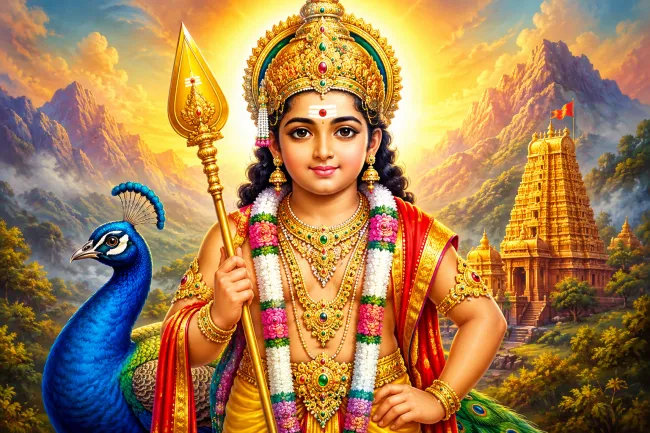
Kartikeya Vrat Katha
Kartikeya Vrat Katha is a sacred devotional story associated with the worship and fasting dedicated to Kartikeya, the divine son of Lord Shiva and Goddess Parvati. Also known as Skanda, Murugan, Subrahmanya, and Shanmukha, Lord Kartikeya is worshipped as the deity of courage, wisdom, victory, protection, and spiritual knowledge. The Kartikeya Vrat Katha is traditionally recited during fasts and special observances dedicated to him and is considered highly auspicious for obtaining his divine blessings.
The central message of the Kartikeya Vrat Katha is the power of faith, devotion, self-discipline, and righteous living. The story teaches that sincere worship of Lord Kartikeya, combined with fasting and prayer, can remove obstacles, fulfill wishes, grant success, and lead devotees toward spiritual progress. The vrat is observed by devotees seeking courage, wisdom, prosperity, family well-being, and protection from difficulties.
The katha often narrates how devotees facing hardships such as financial struggles, lack of success, family problems, illness, fear, or other challenges turned to Lord Kartikeya with unwavering devotion. Through their sincere observance of the vrat, regular prayers, and faith in the Lord, they received divine blessings and experienced positive transformations in their lives. These stories demonstrate that devotion and perseverance can help individuals overcome even the most difficult circumstances.
One of the important themes of the Kartikeya Vrat Katha is the victory of righteousness over evil. Lord Kartikeya is remembered as the divine warrior who defeated the powerful demon Tarakasura and restored peace to the universe. This victory is not only a historical or mythological event but also a spiritual symbol. It represents the triumph of wisdom over ignorance, courage over fear, and virtue over negative tendencies. The katha encourages devotees to wage a similar inner battle against anger, greed, jealousy, pride, laziness, and attachment.
The vrat associated with Lord Kartikeya usually involves fasting, prayer, meditation, recitation of mantras, reading or listening to the vrat katha, and offering flowers, fruits, incense, and lamps to the deity. Many devotees also visit temples dedicated to Lord Kartikeya and participate in devotional activities. These practices help purify the mind, strengthen self-discipline, and deepen one's connection with the divine.
A significant teaching of the Kartikeya Vrat Katha is that true success comes through dedication, hard work, and divine grace. Lord Kartikeya is regarded as the embodiment of youthful energy, determination, and wisdom. His life inspires devotees to remain focused on their goals, face challenges fearlessly, and maintain faith even during difficult times. The katha teaches that obstacles are opportunities for growth and that persistence combined with devotion can lead to victory.
The story also highlights the importance of humility and self-control. Although Lord Kartikeya possesses immense power and authority as the commander of the celestial armies, he remains devoted to righteousness and uses his strength for the welfare of others. This teaches devotees that true leadership is based on service, responsibility, and moral character rather than pride or domination.
For students and seekers of knowledge, the Kartikeya Vrat Katha carries special significance. Lord Kartikeya is considered a bestower of intelligence, concentration, and wisdom. Many devotees observe the vrat seeking success in education, improvement in learning abilities, and clarity of thought. The katha emphasizes that knowledge should be pursued with sincerity, discipline, and humility.
The vrat is also observed by those seeking family harmony, health, prosperity, and protection. Married couples pray for happiness and stability in their homes, while parents seek blessings for the well-being and success of their children. Devotees believe that Lord Kartikeya's grace helps remove negative influences and brings peace and prosperity into their lives.
Spiritually, the Kartikeya Vrat Katha teaches the importance of self-mastery. The external fast symbolizes an inner process of controlling desires, purifying thoughts, and cultivating higher virtues. Through prayer and devotion, devotees learn to overcome fear, ego, and attachment while developing courage, compassion, patience, and wisdom. The vrat becomes a means of spiritual transformation rather than merely a religious ritual.
The katha is especially popular during festivals such as Skanda Sashti, when devotees remember Lord Kartikeya's victory over evil and renew their commitment to living according to dharma. During these occasions, collective worship, fasting, and recitation of sacred stories create an atmosphere of devotion and spiritual upliftment.
Another profound lesson of the Kartikeya Vrat Katha is that divine blessings are available to all who approach God with sincerity and faith. The Lord does not discriminate based on wealth, status, or background. What matters most is the purity of one's heart and the sincerity of one's devotion. This universal message makes the vrat accessible and meaningful for people from all walks of life.
In essence, Kartikeya Vrat Katha is a powerful spiritual narrative that celebrates the divine qualities of Lord Kartikeya and teaches timeless lessons about courage, wisdom, devotion, discipline, and righteousness. It reminds devotees that through faith, perseverance, and moral living, they can overcome obstacles, achieve success, and progress toward spiritual enlightenment. The katha continues to inspire millions of worshippers by strengthening their devotion and guiding them toward a life of virtue, inner strength, and divine grace.
Kartikeya Vrat Katha is a sacred and spiritually significant narrative associated with the worship and fasting dedicated to Kartikeya, the divine son of Lord Shiva and Goddess Parvati. Revered by various names such as Skanda, Murugan, Subrahmanya, Kumara, and Shanmukha, Lord Kartikeya is worshipped as the deity of courage, wisdom, victory, discipline, and divine knowledge. The Kartikeya Vrat Katha is traditionally recited during special fasts and religious observances dedicated to him and serves as a source of spiritual inspiration, moral guidance, and devotional strength for devotees.
The vrat katha revolves around the divine glory of Lord Kartikeya and the immense benefits of observing the vrat with sincerity, faith, and devotion. The narrative emphasizes that devotion to Lord Kartikeya can help devotees overcome obstacles, remove fears, attain success, and achieve both worldly prosperity and spiritual advancement. The story teaches that sincere worship combined with self-discipline and righteous conduct attracts divine blessings and transforms one's life positively.
The origins of the Kartikeya Vrat Katha are closely connected with the divine birth and mission of Lord Kartikeya. According to Hindu scriptures, the powerful demon Tarakasura had become a great threat to the gods, sages, and righteous beings. Blessed with a boon that made him nearly invincible, Tarakasura could only be defeated by the son of Lord Shiva. To restore cosmic balance and protect the universe, Lord Kartikeya manifested as a divine child endowed with extraordinary strength, wisdom, and spiritual power. The katha often recounts this divine purpose and glorifies his eventual victory over Tarakasura, symbolizing the triumph of righteousness over evil.
The vrat associated with Lord Kartikeya is observed by devotees seeking various blessings. Many undertake the fast to gain courage, wisdom, good health, prosperity, success in education, family harmony, and protection from negative influences. The katha explains that those who observe the vrat with devotion and purity of heart receive the grace of Lord Kartikeya and experience positive changes in their lives. The story serves as a reminder that divine blessings are earned through faith, perseverance, and virtuous living.
A central theme of the Kartikeya Vrat Katha is the importance of courage and determination. Lord Kartikeya is portrayed as a fearless warrior who faced immense challenges without hesitation. His example inspires devotees to confront life's difficulties with confidence and resilience. The katha teaches that obstacles should not be feared but overcome through patience, effort, and faith in God. Just as Kartikeya defeated powerful demons, devotees are encouraged to conquer their own fears, doubts, and limitations.
The narrative also emphasizes the significance of wisdom and self-discipline. Lord Kartikeya is not only a warrior but also a symbol of divine intelligence and spiritual knowledge. The vrat encourages devotees to cultivate clarity of thought, good judgment, and control over their desires and emotions. Through fasting and prayer, individuals learn to discipline their minds and focus on higher spiritual goals. The katha teaches that true victory comes from mastering oneself before attempting to overcome external challenges.
Another important lesson conveyed through the Kartikeya Vrat Katha is the value of devotion and humility. Despite his immense power and status as the commander of the celestial armies, Lord Kartikeya remains devoted to righteousness and serves the welfare of all beings. The story encourages devotees to perform their duties with humility, compassion, and sincerity. It reminds them that pride and arrogance create obstacles on the spiritual path, while humility attracts divine grace.
The observance of the Kartikeya Vrat generally involves fasting, meditation, prayer, chanting mantras, reading or listening to the vrat katha, and offering flowers, fruits, incense, and lamps to the deity. Devotees often visit temples dedicated to Lord Kartikeya and participate in collective worship. These practices help create a sacred atmosphere that promotes spiritual reflection, inner peace, and devotion. The vrat becomes an opportunity for devotees to strengthen their relationship with the divine and renew their commitment to virtuous living.
For students and seekers of knowledge, the Kartikeya Vrat Katha holds special importance. Lord Kartikeya is widely regarded as a bestower of intelligence, concentration, memory, and wisdom. Many students observe the vrat and recite the katha seeking success in their studies and guidance in their educational pursuits. The story teaches that knowledge must be combined with discipline and humility to achieve meaningful success.
The katha also highlights the role of Lord Kartikeya as a compassionate protector of devotees. It narrates how those who sincerely worship him receive protection from difficulties, dangers, and negative influences. Devotees believe that his blessings bring courage during challenging times, remove obstacles from their path, and provide strength to face adversity. His divine grace is said to promote peace, prosperity, and happiness in the lives of his worshippers.
Spiritually, the Kartikeya Vrat Katha carries profound symbolic meaning. The demons defeated by Lord Kartikeya represent the inner enemies that reside within every human being, such as anger, greed, jealousy, ego, fear, and attachment. His victories symbolize the triumph of higher consciousness over these negative tendencies. The vrat encourages devotees to engage in self-improvement and spiritual growth by cultivating virtues such as courage, patience, honesty, compassion, and devotion.
The katha is especially significant during Skanda Sashti, when devotees commemorate Lord Kartikeya's victory over evil and dedicate themselves to prayer, fasting, and spiritual practices. During this sacred period, the recitation of the vrat katha inspires devotees to renew their faith and deepen their spiritual commitment.
The story also teaches that divine blessings are available to all people regardless of their social status, wealth, or background. Lord Kartikeya responds to sincere devotion and pure intentions rather than external appearances. This universal message makes the vrat meaningful and accessible to people from all walks of life. It reinforces the belief that faith, dedication, and righteous actions can bring divine grace into anyone's life.
On a deeper philosophical level, the Kartikeya Vrat Katha represents the journey of the soul toward self-realization and spiritual enlightenment. Lord Kartikeya serves as the divine guide who helps seekers overcome ignorance, develop inner strength, and realize their higher purpose. The vrat is not merely an external ritual but a process of inner transformation that leads to greater wisdom, self-mastery, and spiritual awareness.
In conclusion, Kartikeya Vrat Katha is a profound devotional narrative that celebrates the divine power, wisdom, courage, and compassion of Lord Kartikeya. It teaches timeless lessons about faith, discipline, perseverance, humility, and righteous living. Through the observance of the vrat and the recitation of the katha, devotees seek protection, success, prosperity, wisdom, and spiritual growth. The sacred story continues to inspire millions of worshippers by reminding them that with devotion, determination, and divine guidance, every obstacle can be overcome and every soul can progress toward a life of virtue, fulfillment, and spiritual enlightenment.