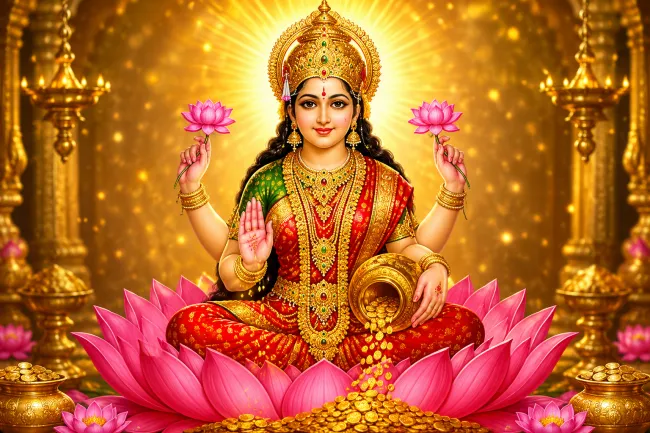
Lakshmi Ji 108 Names
The 108 Names of Goddess Lakshmi, popularly known as Lakshmi Ashtottara Shatanamavali, is a sacred collection of divine names that glorify the many forms, qualities, and blessings of Goddess Lakshmi. Worshipped as the eternal Goddess of wealth, prosperity, fortune, purity, beauty, wisdom, and abundance, Maa Lakshmi occupies a central place in Hindu spirituality. Chanting or reciting her 108 names with devotion is believed to invite divine grace, financial stability, happiness, and spiritual progress into one's life.
Each name in the Ashtottara Shatanamavali represents a unique attribute of the Goddess. Some names praise her as the giver of wealth and prosperity, while others describe her as the embodiment of compassion, purity, intelligence, courage, and divine energy. Together, these names reveal the complete and universal nature of Lakshmi, who not only blesses devotees with material success but also nurtures inner peace, righteousness, and spiritual enlightenment.
The number 108 holds great spiritual significance in Hinduism. It symbolizes completeness, cosmic harmony, and the connection between the individual soul and the Supreme Divine. For this reason, many devotees chant Lakshmi Ji's 108 names using a mala of 108 beads, allowing them to meditate deeply on each divine quality while strengthening their faith and concentration.
The recitation of Lakshmi Ji's 108 names is especially popular during Diwali, Varalakshmi Vratam, Friday Lakshmi Puja, Sharad Purnima, and other auspicious occasions dedicated to the Goddess. Families also chant these sacred names during housewarming ceremonies, business inaugurations, weddings, and festivals to seek blessings for prosperity, peace, and success. Many people include the chanting in their daily spiritual routine to maintain positive energy and attract divine abundance into their homes.
The Ashtottara Shatanamavali highlights Lakshmi as the goddess who removes poverty, sorrow, ignorance, and misfortune while bestowing wealth, wisdom, fertility, health, happiness, and good fortune. Her names describe her as lotus-born, lotus-eyed, lotus-seated, radiant, compassionate, generous, and eternally auspicious. The lotus symbolism reflects spiritual purity, reminding devotees that true prosperity flourishes even amidst life's challenges.
Beyond material wealth, the 108 names emphasize that Lakshmi represents ethical prosperity earned through honesty, devotion, hard work, and righteous living. Hindu scriptures explain that Goddess Lakshmi resides where there is cleanliness, humility, charity, discipline, and respect for Dharma. Therefore, chanting her names inspires devotees to cultivate virtues that naturally attract both spiritual and worldly success.
Regular recitation of Lakshmi Ji's 108 names is believed to remove obstacles related to finances, family life, career, education, and relationships. Devotees pray for stable income, successful business ventures, harmonious households, healthy relationships, and protection from negativity. The chanting also creates a peaceful atmosphere that encourages positivity, gratitude, and devotion within the family.
The names of Lakshmi also celebrate her role as the divine consort of Lord Vishnu, who preserves and sustains the universe. Together, Lakshmi and Vishnu symbolize the perfect balance of prosperity and righteousness, reminding devotees that wealth should always be accompanied by morality, compassion, and responsibility.
Many spiritual traditions teach that the repeated chanting of Lakshmi Ashtottara Shatanamavali purifies the mind and heart while increasing concentration and devotion. The rhythmic recitation helps reduce anxiety, promotes optimism, and strengthens faith during difficult times. It encourages seekers to recognize that true wealth includes knowledge, virtue, health, peace of mind, loving relationships, and spiritual fulfillment in addition to material prosperity.
The 108 Names of Goddess Lakshmi, also known as Lakshmi Ashtottara Shatanamavali, is one of the most sacred and revered collections of devotional names dedicated to Maa Lakshmi, the Hindu Goddess of wealth, prosperity, fortune, beauty, purity, wisdom, and auspiciousness. Each of the 108 names highlights a unique aspect of the Divine Mother, reflecting her limitless powers and compassionate nature. These sacred names are recited by millions of devotees across the world to seek blessings for happiness, financial stability, success, spiritual growth, and overall well-being.
Lakshmi Ji is worshipped as the eternal source of abundance and prosperity. She is believed to reside wherever there is purity, devotion, righteousness, charity, and respect for Dharma. The chanting of her 108 names is considered a powerful spiritual practice that helps devotees invite divine grace into their homes and lives while removing obstacles related to poverty, negativity, and misfortune.
Significance of Lakshmi Ji's 108 Names
The Ashtottara Shatanamavali is more than a list of names; it is a spiritual hymn that glorifies the countless virtues and divine manifestations of Goddess Lakshmi. Every name carries a profound meaning and symbolizes a specific quality such as compassion, generosity, beauty, intelligence, courage, patience, purity, fortune, or divine energy.
The number 108 has deep spiritual importance in Hindu tradition. It represents completeness, cosmic balance, and the unity between the individual soul and the Supreme Divine. Many devotees use a mala of 108 beads while chanting these names, allowing them to meditate on every divine attribute and strengthen their spiritual focus.
The repeated recitation of these names creates a peaceful atmosphere, purifies the mind, and fills the surroundings with positive vibrations that encourage prosperity, harmony, and devotion.
Spiritual Importance
Lakshmi Ji's 108 Names are considered highly beneficial for both material and spiritual prosperity. While Goddess Lakshmi is widely recognized as the giver of wealth and success, Hindu scriptures explain that she also blesses devotees with wisdom, patience, kindness, health, peace, and spiritual enlightenment.
The sacred names remind devotees that true prosperity extends beyond financial riches. Real abundance includes knowledge, moral values, loving relationships, good health, inner peace, and devotion to God. Through these names, worshippers learn that lasting happiness comes from balancing material success with righteousness and humility.
The Ashtottara Shatanamavali encourages individuals to cultivate honesty, discipline, gratitude, generosity, and compassion, qualities that naturally attract the blessings of the Divine Mother.
Importance in Hindu Worship
Lakshmi Ji's 108 Names form an essential part of many Hindu religious ceremonies and daily worship practices. During Lakshmi Puja, devotees offer flowers, kumkum, turmeric, rice, incense, lamps, sweets, fruits, and sacred water while chanting each name with devotion.
The recitation is especially popular during:
- Diwali Lakshmi Puja
- Varalakshmi Vratam
- Friday Lakshmi Worship
- Sharad Purnima
- Kojagiri Purnima
- Navratri Celebrations
- Housewarming Ceremonies
- Business Inaugurations
- Weddings and Family Functions
- Daily Morning and Evening Prayer
Many households recite these names every Friday to seek blessings for family happiness, prosperity, and financial stability.
Symbolism Behind the Names
Each name of Goddess Lakshmi reveals a different form of divine perfection. Some names describe her as the lotus-born Goddess, symbolizing purity and spiritual awakening. Others praise her as the giver of fortune, wealth, courage, intelligence, beauty, success, fertility, and compassion.
The lotus frequently associated with Lakshmi symbolizes purity that remains untouched by worldly impurities, teaching devotees to live with virtue while fulfilling worldly responsibilities.
Several names also connect Lakshmi with Lord Vishnu, emphasizing that prosperity should always exist alongside righteousness, justice, and moral living. The divine union of Lakshmi and Vishnu represents the harmony between material abundance and spiritual values.
Benefits of Chanting Lakshmi Ji's 108 Names
According to Hindu tradition, chanting the 108 names with sincerity and devotion can bring numerous blessings into one's life. Devotees believe that regular recitation helps remove obstacles and attracts positive energy and divine protection.
Some commonly believed benefits include:
- Brings wealth and financial prosperity.
- Removes poverty and scarcity.
- Attracts success in business and career.
- Promotes peace and harmony in the family.
- Improves mental positivity and emotional balance.
- Enhances wisdom and spiritual understanding.
- Removes negative energies from the home.
- Encourages health, happiness, and good fortune.
- Strengthens devotion and inner faith.
- Creates an atmosphere of purity and auspiciousness.
The chanting also develops patience, gratitude, humility, and contentment, making life more balanced and fulfilling.
Lakshmi Ji as the Goddess of Universal Prosperity
Although Goddess Lakshmi is often associated with material wealth, Hindu philosophy teaches that she represents every form of prosperity in existence. She is the source of knowledge, virtue, kindness, health, courage, success, fertility, fame, and spiritual realization.
The 108 names celebrate her as the nurturing Divine Mother who provides both worldly comforts and spiritual wisdom. Her blessings encourage individuals to use wealth responsibly and for the welfare of society through charity, compassion, and righteous actions.
This deeper understanding transforms Lakshmi worship into a path of self-improvement, ethical living, and spiritual growth rather than merely seeking financial gain.