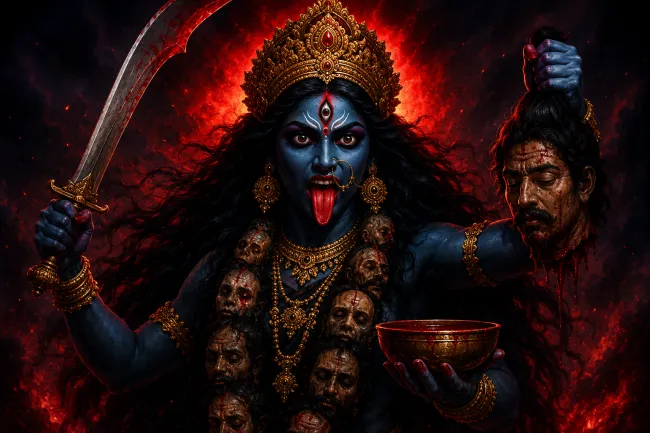
Maa Kali Pooja Vidhi
Maa Kali Pooja Vidhi is the sacred method of worshipping Goddess Kali, one of the most powerful and revered forms of the Divine Mother in Hinduism. Maa Kali is worshipped as the embodiment of supreme Shakti (divine energy), the destroyer of evil, the protector of devotees, and the giver of spiritual liberation. Her worship is performed with deep devotion, faith, and reverence to seek protection, courage, prosperity, wisdom, and freedom from negativity. The ritual of Kali Puja is not merely a religious ceremony but a profound spiritual practice that helps devotees connect with the transformative power of the Divine Mother.
The worship of Maa Kali has been an important part of Hindu spiritual traditions for centuries. She is regarded as the cosmic force that destroys ignorance, ego, fear, and darkness while guiding devotees toward truth, knowledge, and self-realization. Through Kali Pooja, devotees express their devotion, gratitude, and surrender to the Goddess while seeking her blessings for a peaceful and successful life.
The preparation for Maa Kali Pooja begins with the purification of the worshipper and the worship area. Devotees traditionally take a bath, wear clean clothes, and prepare a sacred altar dedicated to the Goddess. The altar is decorated with an idol, image, or yantra of Maa Kali and adorned with flowers, lamps, incense, fruits, sweets, and other sacred offerings. The clean and serene environment symbolizes purity of heart and mind, creating a suitable atmosphere for divine worship.
The ritual begins with an invocation of the Goddess. Devotees meditate upon Maa Kali's divine form and respectfully invite her presence into the worship space. This invocation is a symbolic act of opening one's heart to receive the blessings and guidance of the Divine Mother. During this stage, prayers are offered with sincerity and devotion, establishing a spiritual connection between the devotee and the Goddess.
One of the most significant aspects of Maa Kali Pooja Vidhi is the offering of flowers. Red hibiscus flowers are considered especially sacred to Maa Kali and are commonly used in her worship. These flowers symbolize strength, devotion, and the vibrant energy of the Goddess. Along with flowers, devotees offer sandalwood paste, vermilion, turmeric, rice, fruits, sweets, coconut, and sacred water. Each offering carries symbolic meaning and represents the devotee's love, gratitude, and surrender to the Divine Mother.
The chanting of sacred mantras is another essential component of Kali Pooja. Powerful mantras dedicated to Maa Kali are recited to invoke her divine energy and blessings. These mantras help purify the mind, enhance concentration, and create a spiritually charged atmosphere. Devotees may chant Kali Beej Mantras, Kali Gayatri Mantra, Kali Stotra, Kali Chalisa, Kali Kavach, or the 108 Names of Maa Kali. The repetition of these sacred sounds is believed to awaken spiritual energy and attract divine grace.
Meditation plays an important role in the worship process. Devotees contemplate the form and qualities of Maa Kali while focusing on her symbolism and teachings. Although her appearance may seem fierce, it represents the destruction of ignorance, fear, ego, and all forms of negativity. Meditation on Maa Kali helps individuals develop courage, self-confidence, and spiritual awareness while strengthening their connection with the Divine Mother.
The offering of light through lamps and candles is another meaningful ritual during Kali Puja. The flame symbolizes divine wisdom that removes the darkness of ignorance and illuminates the path of spiritual growth. Incense is offered to create a sacred atmosphere and signify the purification of the surroundings. These rituals help devotees focus their minds on the divine presence of the Goddess and cultivate a sense of inner peace.
An important part of Maa Kali Pooja Vidhi is the recitation of hymns, prayers, and devotional songs in praise of the Goddess. These sacred compositions glorify her divine qualities and inspire feelings of devotion and reverence. Singing or listening to Kali Bhajans, Stutis, and Aartis helps deepen the spiritual experience and strengthens faith in the protective power of the Divine Mother.
After the main worship rituals, the Aarti ceremony is performed. During Aarti, a lighted lamp is waved before the image or idol of Maa Kali while devotional hymns are sung. This ritual symbolizes the offering of light, devotion, and gratitude to the Goddess. The divine flame is believed to carry her blessings and spread positive energy throughout the environment. Devotees often bow before the Goddess and seek her grace during this sacred moment.
One of the most profound aspects of Maa Kali Pooja is the spirit of surrender. Devotees pray to the Goddess to remove obstacles, fears, negative influences, and harmful tendencies from their lives. The worship encourages complete trust in the Divine Mother and inspires individuals to rely on her guidance during times of difficulty and uncertainty. Through sincere devotion, worshippers seek not only material prosperity but also spiritual wisdom and inner transformation.
Maa Kali Pooja is particularly significant during Kali Puja, Navratri, Amavasya (New Moon) nights, and other auspicious occasions dedicated to the Goddess. In many regions of India, especially West Bengal, Assam, Odisha, and other parts of eastern India, Kali Puja is celebrated with great devotion and grandeur. Temples and homes are beautifully decorated, and devotees gather to offer prayers, perform rituals, and seek the blessings of the Divine Mother.
The benefits associated with Maa Kali Pooja are both spiritual and worldly. Devotees believe that regular worship helps remove negative energies, overcome fears, strengthen mental and emotional resilience, and attract prosperity and success. The Goddess is worshipped for protection against difficulties, victory over obstacles, and guidance on the path of righteousness. Her blessings are also believed to promote peace of mind, spiritual growth, and overall well-being.
From a deeper spiritual perspective, Maa Kali Pooja represents the journey of inner transformation. The Goddess teaches that true growth requires the destruction of ignorance, attachment, ego, and negativity. Through her worship, devotees learn to cultivate courage, humility, wisdom, and devotion. The ritual serves as a reminder that every challenge in life can become an opportunity for spiritual evolution when approached with faith and determination.
In conclusion, Maa Kali Pooja Vidhi is a sacred and powerful form of worship that enables devotees to experience the divine presence of the Supreme Mother. Through prayers, offerings, mantra chanting, meditation, and Aarti, worshippers express their devotion and seek her blessings for protection, prosperity, wisdom, and spiritual advancement. More than a ritual, Kali Pooja is a transformative spiritual practice that inspires courage, faith, and self-realization. It continues to be a cherished tradition among millions of devotees who honor Maa Kali as the eternal source of strength, compassion, and divine grace.