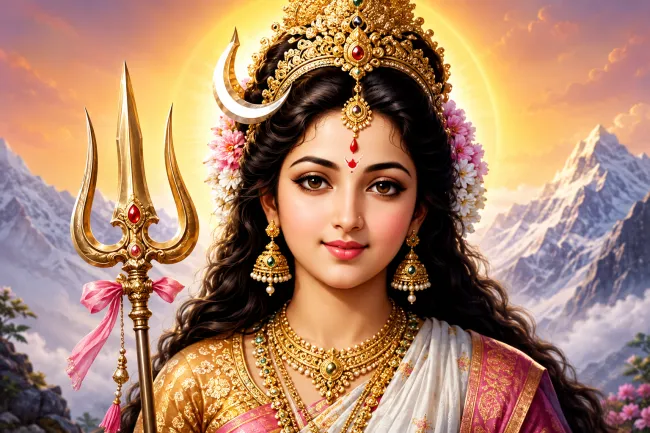
Maa Parvati Chalisa
Maa Parvati Chalisa is a sacred devotional hymn consisting of forty verses dedicated to Goddess Parvati, the Divine Mother and embodiment of Shakti, the cosmic energy that sustains the universe. The Chalisa is widely recited by devotees who seek the blessings of Maa Parvati for peace, prosperity, happiness, protection, spiritual growth, and family well-being. It is one of the most revered prayers in Hindu devotion and serves as a powerful means of connecting with the compassionate and nurturing energy of the goddess.
The Chalisa beautifully glorifies the divine qualities of Maa Parvati, describing her as the source of love, wisdom, purity, strength, and compassion. It highlights her role as the devoted consort of Lord Shiva, the mother of Lord Ganesha and Lord Kartikeya, and the universal protector who guides her devotees through life's challenges. Through its verses, the Chalisa praises her divine beauty, motherly affection, and immense spiritual power, inspiring devotees to cultivate faith and devotion.
One of the central themes of the Maa Parvati Chalisa is the goddess's unwavering dedication and devotion to Lord Shiva. According to Hindu tradition, Parvati performed intense penance and meditation to attain Lord Shiva as her husband. Her story symbolizes determination, patience, and spiritual discipline. The Chalisa reminds devotees that sincere devotion and perseverance can help overcome obstacles and lead to the fulfillment of noble aspirations.
The hymn also emphasizes Maa Parvati's role as Jagadamba, the Mother of the Universe. As the divine mother, she nurtures, protects, and blesses all living beings without discrimination. Devotees believe that her compassion is limitless and that she listens to the prayers of those who seek her refuge with a sincere heart. The Chalisa portrays her as a loving and caring goddess who removes suffering and brings comfort to those facing difficulties.
Throughout the Chalisa, Maa Parvati is praised in her various divine forms, including Gauri, Bhavani, Durga, Annapurna, and Kali. Each form represents a different aspect of her divine nature. As Gauri, she symbolizes purity, beauty, and marital bliss. As Annapurna, she provides nourishment and abundance. As Durga and Kali, she protects her devotees by destroying evil forces and negative influences. These various manifestations demonstrate her complete role as both a nurturing mother and a powerful guardian.
The recitation of Maa Parvati Chalisa is considered highly auspicious and spiritually beneficial. Devotees believe that chanting the Chalisa regularly helps purify the mind, remove negative thoughts, and create a positive atmosphere. It is often recited during festivals such as Navratri, Hartalika Teej, Gangaur, and Maha Shivaratri, as well as during daily worship. Many devotees include the Chalisa in their spiritual routine to strengthen their faith and receive divine guidance.
The Chalisa is also closely associated with family harmony and marital happiness. Since Maa Parvati is regarded as the ideal wife and mother, many worshippers seek her blessings for successful relationships, family unity, and domestic peace. Women, in particular, often recite the Chalisa for the well-being of their families and for blessings related to marriage and prosperity. However, the prayer is equally beneficial for all devotees who wish to cultivate devotion, wisdom, and inner strength.
Another important aspect of the Maa Parvati Chalisa is its emphasis on spiritual transformation. The verses encourage devotees to rise above worldly distractions and focus on developing virtues such as compassion, humility, patience, courage, and self-discipline. By meditating on the divine qualities of Maa Parvati, worshippers are inspired to improve their character and progress on the path of spiritual growth.
The Chalisa also serves as a reminder of the sacred balance represented by Shiva and Parvati. Their divine union symbolizes the harmony between consciousness and energy, wisdom and action, and the masculine and feminine principles of creation. Through devotion to Maa Parvati, devotees seek to bring greater balance, stability, and peace into their own lives.
Regular recitation of Maa Parvati Chalisa is traditionally believed to bring numerous blessings. Devotees often pray for protection from difficulties, success in their endeavors, emotional strength, and freedom from fear and negativity. The sacred verses are said to inspire confidence, improve mental clarity, and help individuals remain steadfast during challenging times. Many worshippers experience a sense of peace and reassurance through the grace of the Divine Mother.
In addition to its spiritual significance, the Maa Parvati Chalisa plays an important role in preserving Hindu devotional traditions. It is recited in homes, temples, and community gatherings, fostering a sense of collective devotion and cultural continuity. The hymn's timeless teachings continue to inspire generations of devotees, helping them maintain a strong connection with their faith and spiritual heritage.
In conclusion, the Maa Parvati Chalisa is a powerful and deeply meaningful devotional prayer that celebrates the divine glory, compassion, and strength of Goddess Parvati. It honors her as the universal mother, the embodiment of Shakti, and the eternal companion of Lord Shiva. Through its sacred verses, devotees seek blessings for happiness, prosperity, protection, family harmony, and spiritual enlightenment. The Chalisa remains a cherished part of Hindu worship, offering guidance, inspiration, and divine grace to all who recite it with faith and devotion.
Maa Parvati Chalisa is a sacred devotional hymn dedicated to Goddess Parvati, the Divine Mother and the embodiment of Shakti, the supreme cosmic energy. Composed in forty verses, the Chalisa glorifies the divine virtues, powers, compassion, and spiritual significance of Maa Parvati. It is recited by millions of devotees who seek her blessings for peace, prosperity, protection, marital harmony, spiritual growth, and overall well-being. The Chalisa serves as a powerful medium through which devotees express their devotion and strengthen their connection with the goddess.
Goddess Parvati occupies a central place in Hindu spirituality and is revered as the eternal consort of Lord Shiva. She is regarded as the source of divine energy that sustains the universe and empowers all forms of life. Through the verses of the Parvati Chalisa, devotees praise her beauty, kindness, wisdom, courage, and unwavering dedication to righteousness. The hymn highlights her role as a loving mother, a devoted wife, and a powerful protector of her devotees.
According to Hindu scriptures, Maa Parvati was born as the daughter of King Himavan and Queen Mena. From an early age, she displayed exceptional devotion toward Lord Shiva. Through intense meditation, penance, and unwavering faith, she eventually attained Lord Shiva as her husband. This sacred story is often reflected in the Parvati Chalisa, inspiring devotees to cultivate perseverance, devotion, and spiritual discipline in their own lives.
The verses of the Maa Parvati Chalisa beautifully describe the goddess's divine form and her various manifestations. She is worshipped as Gauri, Durga, Bhavani, Annapurna, Kali, and many other forms, each representing a unique aspect of her divine nature. In her gentle forms, she blesses devotees with love, prosperity, wisdom, and nourishment. In her powerful forms, she destroys evil, removes obstacles, and protects righteousness. The Chalisa acknowledges all these aspects, portraying Maa Parvati as both a nurturing mother and a fearless defender of truth.
One of the most significant themes of the Parvati Chalisa is the concept of divine motherhood. Maa Parvati is revered as Jagadamba, the Mother of the Universe, who cares for all living beings with unconditional love and compassion. The Chalisa repeatedly emphasizes her benevolence and willingness to help devotees who approach her with sincerity and faith. Through her motherly grace, she provides comfort during difficult times and guidance during moments of uncertainty.
The Chalisa also celebrates the sacred union of Shiva and Parvati, which symbolizes the perfect balance between consciousness and energy, wisdom and action, and masculine and feminine principles. This divine relationship serves as an example of harmony, mutual respect, and spiritual partnership. By reciting the Parvati Chalisa, devotees seek to cultivate these qualities in their own relationships and family life.
Reciting Maa Parvati Chalisa is considered highly beneficial for spiritual and worldly progress. Devotees believe that regular chanting helps purify the mind, strengthen faith, and create a positive spiritual environment. The sacred verses inspire devotion and encourage individuals to focus on noble values such as patience, humility, compassion, courage, and self-discipline. Through consistent recitation, worshippers develop a deeper connection with the Divine Mother and experience greater inner peace.
The Parvati Chalisa is especially popular among women who pray for marital happiness, family prosperity, and the well-being of their loved ones. It is often recited during auspicious occasions such as Navratri, Hartalika Teej, Gangaur, and Maha Shivaratri. However, the Chalisa can be recited by anyone regardless of age or gender, as Maa Parvati's blessings are believed to be available to all sincere devotees.
The spiritual benefits associated with the recitation of Maa Parvati Chalisa are numerous. Devotees believe that it helps remove negative influences, reduce mental stress, and strengthen emotional resilience. The Chalisa is also said to attract positive energy, promote family harmony, and assist in overcoming obstacles and challenges. Many worshippers turn to the goddess during times of difficulty, seeking her guidance and protection through the powerful verses of the Chalisa.
In addition to material blessings, the Parvati Chalisa serves as a path toward spiritual awakening and self-transformation. The hymn reminds devotees that true strength comes from faith, devotion, and connection with the Divine. By reflecting on the qualities of Maa Parvati, worshippers are inspired to develop greater wisdom, compassion, and spiritual awareness. The Chalisa encourages individuals to look beyond temporary worldly concerns and focus on achieving lasting peace and fulfillment.
Another important aspect of the Maa Parvati Chalisa is its role in preserving Hindu devotional traditions. Families often recite the Chalisa together, passing down sacred teachings and values from one generation to the next. This practice helps strengthen family bonds while fostering a deep appreciation for spiritual heritage and cultural traditions.
The poetic beauty of the Chalisa makes it accessible and meaningful for devotees of all backgrounds. Its verses are filled with praise, devotion, and profound spiritual wisdom, making it not only a prayer but also a source of inspiration and guidance. Whether recited daily or on special occasions, the Chalisa offers comfort, hope, and encouragement to those seeking divine support.
In conclusion, Maa Parvati Chalisa is a revered devotional hymn that celebrates the infinite glory, compassion, and power of Goddess Parvati. It portrays her as the Divine Mother, the embodiment of Shakti, and the eternal companion of Lord Shiva. Through its sacred verses, devotees honor her many forms and seek her blessings for happiness, prosperity, protection, wisdom, and spiritual growth. The timeless message of the Parvati Chalisa continues to inspire faith and devotion, helping millions of worshippers experience the loving presence and divine grace of Maa Parvati in their lives.