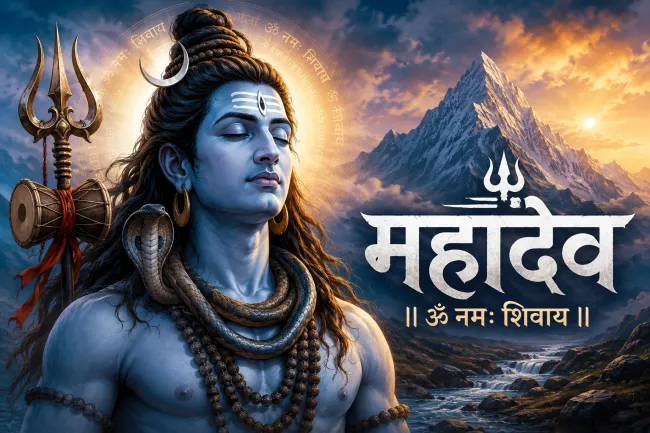
Shiv Manas Pooja
Shiv Manas Pooja is one of the most beautiful and deeply spiritual devotional hymns dedicated to Lord Shiva. It is a unique form of worship in which the devotee performs the entire puja mentally (in the mind) instead of using physical offerings. This sacred stotra is traditionally attributed to the great philosopher-saint Adi Shankaracharya, who composed many profound hymns to guide devotees toward inner realization and pure devotion.
The term “Manas Pooja” means “mental worship.” In this practice, the devotee imagines offering flowers, water, incense, lamps, and other sacred items to Lord Shiva within their heart and mind. The central idea is that true devotion does not depend on external rituals but on inner purity, love, and complete surrender to the Divine. Shiv Manas Pooja teaches that when worship is performed with sincere thought and emotion, it becomes even more powerful than physical offerings.
The hymn beautifully describes how the devotee mentally creates a divine temple for Lord Shiva within their consciousness. In this sacred mental space, the devotee envisions bathing the Shiva Linga with pure waters, decorating it with flowers, lighting lamps, offering incense, and chanting prayers with full devotion. Each act symbolizes purification of thoughts, emotions, and ego. The entire puja becomes a symbolic journey from external worship to inner spiritual awakening.
One of the most important messages of Shiv Manas Pooja is that Lord Shiva resides within every heart. The hymn emphasizes that God is not limited to temples or idols but is present in the inner self of every being. By performing mental worship, devotees realize that the true temple of Shiva is within their own consciousness. This understanding helps them develop a deeper spiritual connection and recognize the divine presence in all aspects of life.
The stotra also highlights the importance of purity of mind. It teaches that thoughts, intentions, and emotions are the most important offerings one can give to God. Even without material offerings, a pure heart filled with devotion is enough to please Lord Shiva. Shiv Manas Pooja encourages devotees to remove negative thoughts such as anger, ego, jealousy, and attachment, and replace them with love, humility, compassion, and faith.
The hymn also reflects the philosophy of Advaita Vedanta, which teaches the oneness of the individual soul and the Supreme Reality. By performing mental worship, the devotee gradually dissolves the sense of separation between themselves and Lord Shiva. This leads to spiritual realization, where the worshipper, the act of worship, and the object of worship become one unified consciousness. This state is considered the highest form of devotion and liberation.
Shiv Manas Pooja also emphasizes that devotion is not restricted by time, place, or resources. Even a person who has no access to temples or physical offerings can perform this inner worship at any time. This makes the practice universal and accessible to all devotees, regardless of their circumstances. It teaches that sincere devotion is more important than ritualistic complexity.
The hymn is often recited during meditation, daily worship, and especially on auspicious days dedicated to Lord Shiva such as Mondays, the holy month of Shravan, and the festival of Maha Shivaratri. Devotees believe that reciting Shiv Manas Pooja with concentration and faith purifies the mind, enhances spiritual awareness, and brings inner peace.
Another key aspect of Shiv Manas Pooja is the surrender of ego. The devotee mentally offers everything—body, mind, thoughts, and actions—to Lord Shiva. This symbolic surrender represents detachment from worldly identity and complete acceptance of divine will. Through this practice, devotees learn to let go of pride and realize that everything belongs to the Divine.
The hymn also describes Lord Shiva as the eternal, formless, and compassionate Supreme Being who accepts even the simplest offerings made with love. It reinforces the idea that God is easily pleased by devotion and sincerity rather than material wealth or elaborate rituals. This makes Shiv Manas Pooja a deeply personal and emotional form of worship.
Spiritually, the practice of Shiv Manas Pooja helps cultivate mindfulness, devotion, and inner discipline. It trains the mind to focus on divine thoughts and reduces distractions caused by worldly desires. Over time, this mental worship transforms the devotee’s personality, making them more peaceful, humble, and spiritually aware.
The philosophical depth of the hymn lies in its teaching that true worship happens within. It guides devotees from external ritual practices toward inner realization and self-awareness. By meditating on Lord Shiva within the heart, the devotee experiences a direct connection with the Divine presence, leading to spiritual growth and liberation.
In conclusion, Shiv Manas Pooja is a profound and transformative hymn that teaches the essence of inner worship. It reveals that Lord Shiva can be worshipped purely through thoughts, devotion, and surrender, without the need for physical rituals. The hymn inspires devotees to purify their minds, dissolve ego, and realize the divine presence within themselves. Through sincere mental worship, one attains peace, devotion, spiritual wisdom, and ultimately union with Lord Shiva. Om Namah Shivaya.
Shri Shiv Manas Pooja is one of the most profound and spiritually uplifting hymns dedicated to Lord Shiva. It is a unique form of worship in which the devotee performs the entire puja mentally, offering devotion through thoughts, imagination, and pure inner intention rather than physical rituals. This sacred stotra is traditionally attributed to the great philosopher-saint Adi Shankaracharya, who emphasized inner realization and devotion as the highest form of worship.
The term “Manas Pooja” means “mental worship.” In this practice, the devotee creates a complete spiritual ritual within the mind. Instead of using external objects like flowers, water, lamps, or incense, everything is offered internally to Lord Shiva. The devotee imagines a sacred temple of Shiva within their heart and performs every step of worship with deep devotion and concentration. This inner worship reflects the idea that true spirituality is not dependent on external materials but on the purity of consciousness.
The hymn begins with the devotee mentally inviting Lord Shiva to reside within the heart. The heart itself becomes the sacred temple, and the mind becomes the altar of worship. The devotee then offers divine water to bathe the Shiva Linga, decorates it with imagined flowers, lights spiritual lamps of wisdom, and offers incense of pure thoughts. Every act in the Manas Pooja symbolizes purification of the mind, surrender of ego, and awakening of inner devotion.
One of the central teachings of Shiv Manas Pooja is that Lord Shiva is not limited to physical temples or idols but resides within every being as pure consciousness. The hymn guides devotees to realize that the true temple of Shiva is within their own heart. By turning inward, the devotee discovers that God is not distant but ever-present within. This realization transforms worship into a deeply personal spiritual experience.
The hymn strongly emphasizes purity of mind and intention. It teaches that thoughts are the most powerful offerings one can give to God. Even without wealth or materials, a devotee can attain divine grace through sincere love, humility, and devotion. Shiv Manas Pooja encourages individuals to replace negative emotions such as anger, ego, jealousy, and attachment with positive qualities like compassion, peace, faith, and surrender.
The philosophical foundation of Shiv Manas Pooja is deeply connected with Advaita Vedanta, the non-dualistic philosophy that teaches the unity of the soul and the Supreme Reality. According to this view, the worshipper and the worshipped are ultimately one. Through mental worship, the devotee gradually dissolves the sense of separation between themselves and Lord Shiva. This leads to the realization that the individual soul (Atman) and Shiva (Brahman) are not different but one eternal consciousness.
Another important aspect of the hymn is its accessibility. Shiv Manas Pooja can be performed anywhere and at any time, regardless of external circumstances. A person does not need a temple, ritual materials, or priestly guidance. This makes the practice universal and inclusive, allowing anyone—regardless of social status, wealth, or location—to connect with Lord Shiva through pure devotion.
The hymn also describes the complete surrender of the devotee to Lord Shiva. In mental worship, the devotee offers not only flowers and rituals but also their entire being—body, mind, thoughts, and actions. This symbolizes total devotion and detachment from ego. The act of surrender helps the devotee overcome pride and realize that everything in existence belongs to the Divine.
Shiv Manas Pooja is often recited during meditation, daily prayer, and special occasions dedicated to Lord Shiva such as Mondays, the holy month of Shravan, Pradosh Vrat, and the sacred festival of Maha Shivaratri. Devotees believe that regular recitation purifies the mind, enhances concentration, and deepens spiritual awareness.
The hymn also highlights the compassionate nature of Lord Shiva. It teaches that Shiva is easily pleased by sincerity and devotion rather than elaborate rituals. Even a simple thought offered with love is enough to attract His grace. This makes Shiv Manas Pooja one of the most intimate and heartfelt forms of worship in Hindu tradition.
Spiritually, the practice of Manas Pooja leads to inner transformation. As devotees repeatedly visualize and perform worship in their minds, their thoughts gradually become more disciplined and focused on the Divine. This reduces distractions, weakens negative tendencies, and strengthens spiritual awareness. Over time, the devotee begins to experience lasting peace and inner stability.
The deeper message of Shiv Manas Pooja is the realization that true worship happens within. External rituals are helpful, but the highest form of devotion is internal awakening. When the mind becomes pure and fully absorbed in the Divine, worship becomes continuous and effortless. This state is considered a step toward liberation, where the devotee experiences unity with Lord Shiva.
In conclusion, Shri Shiv Manas Pooja is a deeply spiritual and transformative hymn that teaches the essence of inner worship. It guides devotees to realize that Lord Shiva resides within the heart and can be worshipped through pure thoughts, devotion, and surrender. The hymn emphasizes mental purity, self-realization, and the unity of the soul with the Divine. Through sincere practice, Shiv Manas Pooja brings peace, devotion, wisdom, and spiritual liberation, ultimately leading the devotee toward eternal union with Lord Shiva. Om Namah Shivaya.