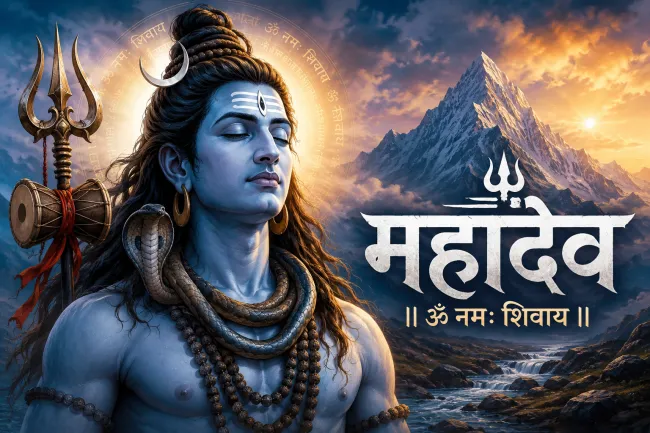
Shri Rudram Namakam
Shri Rudram Namakam is one of the most sacred, powerful, and revered hymns found in the Krishna Yajurveda, specifically in the Taittiriya Samhita. It is dedicated to Lord Rudra, a fierce and compassionate form of Lord Shiva, who is worshipped as the Supreme Lord of the universe. Shri Rudram is considered one of the most important Vedic prayers and occupies a central place in Shaiva worship and Vedic rituals.
The text is divided into two main sections: Namakam and Chamakam. The Namakam portion derives its name from the repeated use of the word “Namah” (salutations or obeisance), which appears throughout the hymn. Through repeated salutations, devotees offer their reverence to Lord Rudra in his countless forms and manifestations throughout the universe.
For thousands of years, sages, saints, and devotees have recited Shri Rudram Namakam to invoke divine blessings, seek protection, attain spiritual growth, and experience inner peace. It is regarded not merely as a hymn of praise but as a profound spiritual revelation that teaches the omnipresence and supreme nature of Lord Shiva.
Meaning and Significance of Namakam
The word Namakam comes from the Sanskrit word “Namah,” meaning “I bow,” “I offer my salutations,” or “I surrender.” Throughout the hymn, devotees repeatedly bow before Lord Rudra, acknowledging His presence in every aspect of creation.
The repeated salutations symbolize humility, devotion, and surrender. They remind devotees that the Divine exists everywhere—in nature, in living beings, in the forces of the universe, and within the human heart. The Namakam teaches that there is no place where Lord Shiva is absent. He is present in the highest heavens, the deepest forests, the flowing rivers, the mountains, the animals, the elements, and every form of life.
This universal vision is one of the most profound teachings of Shri Rudram Namakam.
Lord Rudra as the Supreme Reality
In Shri Rudram Namakam, Lord Rudra is praised as the supreme cosmic power who governs the entire universe. He is described as both fierce and compassionate, capable of destruction as well as protection. This dual nature reflects the deeper truth that destruction is often necessary for renewal and transformation.
The hymn presents Rudra as the ultimate source of creation, preservation, and dissolution. He transcends all limitations of time, space, and form. At the same time, he is intimately present in every aspect of existence.
By worshipping Rudra, devotees recognize the Divine as both transcendent and immanent—beyond the universe yet present within it.
Universal Presence of Lord Shiva
One of the most remarkable features of Shri Rudram Namakam is its recognition of Lord Shiva's presence in all forms of existence. The hymn offers salutations to Rudra as he appears in countless manifestations throughout the world.
The text honors Shiva as:
- The Lord of mountains and forests.
- The ruler of rivers and oceans.
- The protector of animals and living creatures.
- The master of warriors and rulers.
- The guardian of farmers, craftsmen, and workers.
- The indwelling presence in every human being.
- The force behind natural phenomena and cosmic energies.
This universal perspective teaches that all creation is sacred because it is permeated by the presence of the Divine. It encourages respect for nature, compassion toward all beings, and awareness of the unity underlying diversity.
Spiritual Symbolism in Shri Rudram Namakam
The hymn contains profound symbolic meanings that guide devotees toward deeper spiritual understanding.
Destruction of Ignorance
Although Rudra is often associated with destruction, the Namakam teaches that the true purpose of this destruction is the removal of ignorance, ego, attachment, and negativity. Lord Shiva destroys that which prevents spiritual growth and divine realization.
Divine Protection
Many verses seek Rudra's protection from suffering, disease, misfortune, and harmful influences. These prayers reflect the belief that the Lord protects those who sincerely seek his refuge.
Humility and Surrender
The repeated use of “Namah” teaches humility and surrender. By bowing before the Divine, devotees learn to let go of pride, selfishness, and ego-centered thinking.
Unity of Existence
The hymn emphasizes that
Shri Rudram Namakam is one of the most sacred and powerful hymns found in the Krishna Yajurveda, specifically within the Taittiriya Samhita. It is dedicated to Lord Rudra, a divine form of Lord Shiva who embodies both immense power and boundless compassion. Shri Rudram is regarded as one of the most important Vedic prayers and has been recited by sages, priests, and devotees for thousands of years as a means of worship, purification, protection, and spiritual upliftment.
The text is divided into two major sections: Namakam and Chamakam. The first section, Namakam, receives its name from the repeated use of the word “Namah”, meaning “salutations” or “I bow.” Through these repeated salutations, devotees express their reverence and surrender to Lord Rudra in his countless forms throughout creation.
Shri Rudram Namakam is much more than a prayer of praise. It is a profound spiritual text that reveals the universal presence of Lord Shiva and teaches deep philosophical truths about the nature of existence, divinity, and spiritual realization.
Essence of Shri Rudram Namakam
The central theme of Shri Rudram Namakam is the recognition of Lord Rudra as the Supreme Reality that exists in all forms and throughout the entire universe. The hymn repeatedly offers salutations to the Lord, acknowledging His presence in every aspect of creation.
Unlike ordinary prayers that focus on a single image or form of God, the Namakam presents a vast and universal vision of divinity. It teaches that Lord Shiva is present everywhere—in nature, in human beings, in animals, in the elements, and in all cosmic forces.
The repeated chanting of “Namah” symbolizes humility, devotion, and surrender. It reminds devotees to let go of ego and recognize the divine presence that permeates all existence.
Lord Rudra as the Supreme Lord
One of the most important teachings of Shri Rudram Namakam is the glorification of Lord Rudra as the Supreme Lord of the universe. The hymn describes Him as the source of creation, preservation, and dissolution. He governs the forces of nature, protects living beings, and guides the cosmic order.
Lord Rudra is portrayed as both fierce and compassionate. His fierce aspect destroys ignorance, negativity, and obstacles, while His compassionate nature blesses devotees with protection, wisdom, and spiritual growth.
The Namakam emphasizes that these seemingly opposite qualities are perfectly balanced within Lord Shiva. His power is always guided by divine wisdom and compassion.
Recognition of Shiva’s Omnipresence
A unique feature of Shri Rudram Namakam is its extraordinary vision of the Divine as omnipresent. The hymn offers salutations to Lord Rudra in countless forms, recognizing Him as the indwelling presence in every part of creation.
The text honors Shiva as:
- The Lord residing in mountains and forests.
- The protector of rivers, lakes, and oceans.
- The ruler of animals and living creatures.
- The guide of travelers and guardians.
- The force present in storms, winds, and natural energies.
- The protector of communities and societies.
- The divine presence within every human heart.
This universal perspective teaches devotees to see all creation as sacred and worthy of respect because it is permeated by the presence of the Divine.
Spiritual Symbolism
The verses of Shri Rudram Namakam contain deep symbolic meanings that convey important spiritual lessons.
Destruction of Ignorance
The destructive power of Rudra symbolizes the removal of ignorance, ego, and negative tendencies. Rather than promoting destruction for its own sake, the hymn teaches that spiritual growth requires the elimination of inner obstacles.
Divine Protection
Many portions of the Namakam seek Lord Rudra’s protection from suffering, disease, fear, and harmful influences. This reflects the belief that sincere devotion invokes divine grace and guidance.
Humility and Surrender
The constant repetition of “Namah” teaches humility and surrender. By repeatedly bowing before the Divine, devotees learn to overcome pride and cultivate reverence, gratitude, and devotion.
Unity of Creation
The hymn teaches that the same divine consciousness exists within all beings and forms. This understanding fosters compassion, respect, and a sense of unity with the world.
Philosophical Teachings
Beyond its devotional aspects, Shri Rudram Namakam contains profound philosophical insights. It teaches that God cannot be confined to a single form, place, or concept. The Divine is both transcendent and immanent—beyond creation yet present within it.
The Namakam encourages devotees to expand their awareness beyond personal identity and recognize the universal consciousness underlying all existence. It teaches that spiritual awakening comes from perceiving the unity behind the apparent diversity of the world.
The hymn also emphasizes the temporary nature of material existence and the eternal reality of the Divine. Through devotion and spiritual practice, individuals can transcend ignorance and realize their true spiritual nature.
Importance in Vedic Rituals
Shri Rudram Namakam occupies a central place in Vedic worship and Shiva-related rituals. It is considered one of the most powerful Vedic chants and is recited during numerous sacred ceremonies.