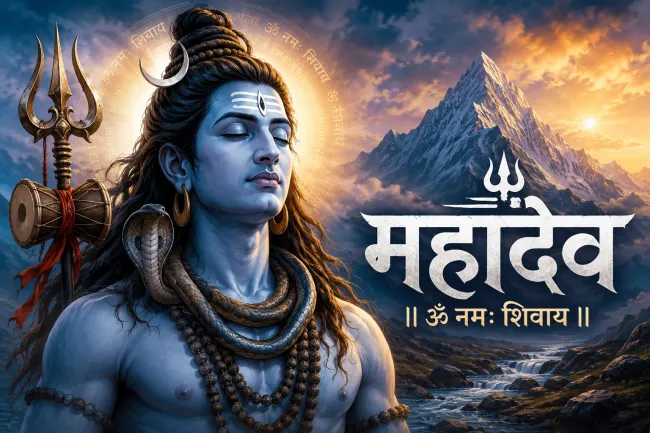
Vedasara Shiva Stotram
The Vedsar Stotra (Vedasara Shiva Stotram) is a highly revered hymn dedicated to Lord Shiva. The title Vedsar or Vedasara means "The Essence of the Vedas," indicating that this sacred stotra contains the fundamental spiritual truths and philosophical teachings found in the Vedic scriptures. It is a profound prayer that glorifies Lord Shiva as the Supreme Reality, the source of creation, the sustainer of the universe, and the ultimate goal of spiritual realization.
The Vedsar Stotra is widely cherished by devotees because it combines devotion (bhakti) with deep spiritual wisdom (jnana). Through its verses, it presents Lord Shiva not merely as a deity but as the eternal, infinite consciousness that pervades all existence. The hymn teaches that Shiva is beyond form, time, space, and worldly limitations, yet he lovingly manifests in forms that devotees can worship and understand.
One of the central themes of the Vedsar Stotra is the recognition of Lord Shiva as the Supreme Brahman, the highest and absolute reality described in the Vedas and Upanishads. The stotra explains that all names, forms, and manifestations of the universe originate from this divine source. Shiva is portrayed as the eternal truth that remains unchanged despite the continuous cycles of creation, preservation, and dissolution occurring throughout the cosmos.
The hymn emphasizes that Lord Shiva is both transcendent and immanent. He exists beyond the physical universe and all human understanding, yet he is also present within every living being as the inner Self. This teaching reflects one of the most profound concepts of Hindu philosophy—that the divine is not separate from creation but exists within all forms of life and consciousness.
A major message of the Vedsar Stotra is the importance of overcoming ignorance and realizing one's true nature. According to the stotra, most human suffering arises because people identify only with the body, mind, and material world while forgetting their divine essence. Through devotion to Shiva, meditation, and spiritual knowledge, individuals can transcend ignorance and recognize the eternal Self within.
The Vedsar Stotra also praises Lord Shiva's compassionate nature. Although he is the Supreme Lord of the universe, he remains accessible to all devotees regardless of their social status, education, or worldly position. The hymn teaches that sincere devotion and a pure heart are sufficient to attract Shiva's grace. His compassion extends equally to all beings, making him one of the most beloved deities in Hindu tradition.
Another important aspect of the stotra is its emphasis on non-duality. It teaches that the apparent separation between the individual soul and the Supreme Reality is ultimately an illusion created by ignorance. In truth, the individual self and the universal consciousness are one. This realization is considered the highest spiritual achievement and the ultimate goal of human life.
The Vedsar Stotra beautifully describes Shiva through both symbolic and philosophical imagery. It praises him as the Lord adorned with the crescent moon, the sacred river Ganga, the serpent, and the trident. At the same time, it explains that these symbols represent deeper spiritual truths such as wisdom, purity, mastery over fear, and transcendence of worldly limitations.
The hymn also highlights the significance of meditation and contemplation. It encourages devotees to look beyond external appearances and discover the divine presence within their own hearts. Through regular recitation and reflection on the stotra's teachings, practitioners gradually develop inner peace, clarity, and spiritual awareness.
Spiritually, the Vedsar Stotra teaches that true liberation (moksha) is attained not through material achievements but through self-realization and devotion to the Divine. It reminds devotees that worldly pleasures and possessions are temporary, while the knowledge of one's eternal nature brings lasting fulfillment and freedom from suffering.
The stotra further emphasizes the harmony between devotion and wisdom. Rather than treating them as separate paths, it shows that genuine devotion naturally leads to spiritual understanding, while true knowledge deepens devotion. This balanced approach makes the hymn meaningful for both devotees and spiritual seekers.
Regular recitation of the Vedsar Stotra is believed to bring numerous benefits. Devotees believe it purifies the mind, strengthens faith, removes negative thoughts, enhances concentration, and promotes spiritual growth. The hymn is often recited during daily worship, meditation, Mondays dedicated to Shiva, the month of Shravan, and especially on Maha Shivaratri.
The Vedsar Stotra also encourages humility. It reminds devotees that the infinite nature of Lord Shiva cannot be fully comprehended by the human intellect. This awareness inspires reverence, surrender, and gratitude toward the Divine. The hymn teaches that spiritual progress begins when one approaches God with humility and an open heart.
Another profound teaching of the stotra is that the Divine exists equally in all beings. This understanding inspires compassion, kindness, and respect toward others. By recognizing the presence of Shiva in everyone, devotees learn to cultivate harmony and love in their relationships and actions.
Overall, the Vedsar Stotra is a powerful blend of devotion, philosophy, and spiritual wisdom. It presents Lord Shiva as the eternal Supreme Reality, the inner Self of all beings, and the ultimate source of liberation. Through its sacred verses, the hymn guides devotees toward self-knowledge, devotion, inner peace, and spiritual awakening. It remains a timeless treasure of Hindu spirituality, inspiring seekers to look beyond the temporary world and realize the eternal truth within.
Om Namah Shivaya – May Lord Shiva, the essence of the Vedas and the eternal Supreme Reality, bless all devotees with wisdom, devotion, inner peace, self-realization, and the divine grace that leads to liberation and eternal bliss.
The Vedsar Stotra, also known as the Vedasara Shiva Stotram, is a highly revered hymn dedicated to Lord Shiva. The word "Vedasara" means "the essence of the Vedas," indicating that this sacred stotra contains the fundamental spiritual truths and divine wisdom found in the ancient Vedic scriptures. It is regarded as a profound prayer that combines devotion, philosophy, self-realization, and the highest teachings of Hindu spirituality into a concise yet powerful hymn.
The Vedsar Stotra glorifies Lord Shiva as the Supreme Reality, the eternal consciousness that exists beyond time, space, form, and material limitations. It presents Shiva not merely as a deity to be worshipped but as the ultimate truth that pervades the entire universe. Through its sacred verses, the stotra guides devotees toward a deeper understanding of God, the soul, and the nature of existence.
Origin and Spiritual Importance
The Vedsar Stotra is traditionally attributed to the great philosopher and spiritual master Adi Shankaracharya, who played a crucial role in reviving and systematizing the philosophy of Advaita Vedanta. Adi Shankaracharya composed many devotional hymns that beautifully combined devotion with profound spiritual wisdom, and the Vedsar Stotra is considered one of his most meaningful works dedicated to Lord Shiva.
The stotra is highly valued because it summarizes complex Vedic and Upanishadic teachings in a form that can be understood and recited by ordinary devotees. It serves as both a prayer and a philosophical text, helping seekers develop devotion while simultaneously deepening their spiritual understanding.
Lord Shiva as the Supreme Reality
One of the central teachings of the Vedsar Stotra is that Lord Shiva is the Supreme Brahman, the ultimate reality described in the Vedas and Upanishads.
According to the hymn, Shiva is:
- The source of all creation.
- The sustainer of the universe.
- The force behind transformation and dissolution.
- The eternal consciousness beyond all change.
- The supreme truth that exists within and beyond the cosmos.
The stotra explains that while the universe appears diverse and constantly changing, its underlying reality is one eternal divine consciousness, which is Shiva himself.
Shiva Beyond Form and Attributes
A unique aspect of the Vedsar Stotra is its emphasis on Shiva's transcendental nature.
The hymn teaches that Lord Shiva is:
- Formless yet present in all forms.
- Beyond birth and death.
- Beyond time and space.
- Beyond human concepts and limitations.
- The eternal witness of all existence.
Although devotees worship Shiva through sacred symbols such as the Shiva Lingam and divine images, the stotra reminds them that his true nature extends beyond all physical representations.
This teaching encourages spiritual seekers to look beyond external appearances and seek the deeper divine reality that exists everywhere.
Unity of the Individual Soul and the Divine
One of the most profound messages of the Vedsar Stotra is the teaching of non-duality (Advaita).
The hymn explains that the apparent separation between the individual soul (Atman) and the Supreme Reality (Brahman) is an illusion created by ignorance.
According to the stotra:
- The true Self is eternal.
- The soul is not separate from God.
- Divine consciousness exists within every being.
- Realizing this truth leads to liberation.
This realization forms the heart of Advaita Vedanta philosophy and is one of the primary spiritual teachings of the hymn.
Removal of Ignorance
The Vedsar Stotra repeatedly emphasizes that ignorance is the root cause of human suffering.
People often identify themselves solely with:
- The physical body.
- The mind.
- Emotions.
- Social roles.
- Material possessions.
Because of this limited identification, they experience fear, attachment, sorrow, and dissatisfaction.
The stotra teaches that through devotion to Lord Shiva, meditation, self-inquiry, and spiritual knowledge, one can overcome ignorance and discover one's true divine nature.
Shiva as the Inner Self
A beautiful aspect of the Vedsar Stotra is its teaching that Lord Shiva resides within the heart of every being.
The hymn explains that Shiva is:
- The consciousness behind all thoughts.
- The witness of all experiences.
- The source of life and awareness.
- The divine presence within every living creature.
This understanding transforms worship from an external act into an inner spiritual journey. Devotees learn that seeking Shiva ultimately means discovering the divine presence within themselves.
Symbolic Description of Lord Shiva
The stotra also praises Lord Shiva through his sacred symbols and attributes.
The Crescent Moon
The moon on Shiva's forehead symbolizes mastery over time and the mind. It represents peace, balance, and emotional stability.
The River Ganga
The sacred Ganga flowing through Shiva's matted hair symbolizes purity, wisdom, and divine grace.
The Third Eye
Shiva's third eye represents higher knowledge and spiritual insight. It signifies the power to perceive truth beyond ordinary perception.
The Serpent
The serpent around Shiva's neck symbolizes fearlessness, self-control, and mastery over life energy.